View in your browser
Summer 2024

Kia ora koutou

This summer we've got a bumper edition of our newsletter with lots of news and information for you to browse.

We report on some key findings from two international breast cancer research conferences held late last year: ABC7 in Lisbon, Portugal and SABCS 2023 in Texas, USA. We also have good local news about breast density reporting, extending the age range for screening mammograms, an update of our website info on sex and relationships, and of course news from some of our member groups.

Please scroll down to read more.

Don’t forget to keep checking for more news by clicking on our homepage here and following us on Facebook.

How well are we treating triple negative breast cancer in Aotearoa New Zealand?

BCAC Chair Libby Burgess reflected on this question after attending the premier international breast cancer research conference, SABCS 2023, in San Antonio Texas last month. Triple negative breast cancer (TNBC) is an aggressive subtype lacking HER2 or hormone receptors. It is the most challenging type of breast cancer to treat, particularly at the advanced stage. However, research over the last 20 years has broadened treatment options and improved patient outcomes.

Read Libby’s article on TNBC and how treatment here in Aotearoa/New Zealand measures up internationally here.

Milestone to celebrate as College of Radiologists recommends breast density reporting

BCAC is delighted to see the Royal Australian and New Zealand College of Radiologists (RANZCR) recommend mandating of breast density reporting in both breast screening and diagnosis. The updated position statement notes that those with extremely high mammographic breast density are at a 2.1-fold increased risk of breast cancer, and this is associated with higher rates of breast cancer death.

Read more about this here.

What’s new in breast cancer research? Some impressions from the 2023 San Antonio Breast Cancer Symposium

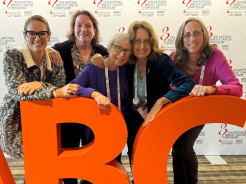
BCAC’s Louise Malone was among 10,000 attendees at this premier international breast cancer research conference held in Texas, 3-8 December. She shares some of the key themes she observed among the many workshops, posters and sessions. Read more here.

Treatment holidays most likely to be safe for HER2-positive and/or hormone receptor-positive advanced breast cancer

Treatment holidays, where therapy is temporarily stopped, are something that those living with advanced breast cancer sometimes have to contemplate. Perhaps there is an important occasion coming up – a wedding or other family celebration, or an overseas trip – where the side effects of the treatment would interfere with enjoyment of the occasion. In discussing this with their oncologist, it’s important to take into account the current evidence – for or against – taking treatment holidays.

Click here for BCAC’s report of a talk on this topic at the recent ABC7 international advanced breast cancer conference.

Sharing prognostic information – what your oncologist can tell you

Not all patients are ready to discuss their prognosis soon after a diagnosis of advanced breast cancer – and that is their choice – but the earlier this is discussed the more influence patients can have on their treatment plan and end of life options. Oncologists are not necessarily starting the conversations early enough but it is important that they do, taking into account their patients’ values and preferences.

At the recent ABC7 international advanced breast cancer conference, Dr Belinda Kiely provided information from an oncologist’s perspective, and highlighted some useful tools for patients to consider when having these important conversations. Click here for BCAC’s report on her talk.

Overcoming fear: Don’t lose the joy of living in the fear of dying

Claire has been living with HER2-positive advanced breast cancer since 2016; since her cancer progressed she has been processing the fears that inevitably accompany this. Claire’s story is one of overcoming her fears by facing them, and taking control.

Click here for BCAC’s report of Claire’s talk at the recent ABC7 international advanced breast cancer conference.

Relationship between diet and exercise in advanced breast cancer – the jury is still out

Very few studies have looked at the impact of diet or exercise in patients with advanced breast cancer. On a biological level, repeated exercise may limit tumour growth, and some dietary interventions can help improve fatigue. But more research is needed in all these areas. Until there is more evidence, there are things that patients can do to improve their quality of life with a diagnosis of advanced breast cancer.

Click here for BCAC’s report of a talk on this topic at the recent ABC7 international advanced breast cancer conference.

The power of lobbying – the story of one ABC survivor and advocate

October 13th is Metastatic Awareness Day in the United States, thanks to Shirley Mertz, a metastatic breast cancer survivor from the United States.

Read more about the origins of this important day here.

Managing lymphoedema

Many patients with advanced breast cancer develop lymphoedema either after surgery or as a result of cancer itself. It is swelling on the arm, back or chest on the side of the breast surgery, and can occur at any time after diagnosis, even years later. The good news is that oncologic physiotherapy can reduce or prevent lymphoedema in the first place. Even in patients with severe lymphoedema, it can be controlled, with complete elimination of pain and complete recovery of movement and strength.

Click here for BCAC’s report of a talk on this topic at the recent ABC7 conference.

Complementary medicines: what is good and what is bad?

Many people with advanced breast cancer use herbs and supplements, as well as other treatments like relaxation and massage, to relieve symptoms. However, many are taking herbs or supplements that may be harmful or interact with their cancer medications. Click here for BCAC’s report of a talk on this topic at the recent ABC7 conference.

Integrative medicine in advanced breast cancer treatment

Integrative medicine is the combination of medical treatments for cancer and complementary therapies to cope with symptoms and side effects. BCAC’s Marion Barnett recently attended the ABC7 international advanced breast cancer conference online. Click here for her report on a talk about integrative medicine given by German breast cancer researcher Rachel Würstlein. 

Let’s talk about sex and relationships

When you’re caught up in the flurry of medical activity after a breast cancer diagnosis, it’s easy to lose sight of ordinary life. Things that were important, like our relationships and our sex lives, get put on the back burner. Turning our focus back onto those things, and even knowing where to start again, can be difficult. With help from sex therapist Edit Horvath and Committee Member Maria Marama, BCAC has put together a comprehensive guide to sex and relationships for anyone experiencing breast cancer. Click here to read more.

Free mammograms up to 74 in new Government’s 100-day plan

Soon women between the ages of 70 to 74 will be able to continue having free mammograms, after seven years of hard campaigning by Breast Cancer Foundation NZ. The new National-led Government has promised to “take first steps to extend free breast cancer screening to those aged up to 74” in its 100-day plan.

The current age limit of 69 is outdated, puts us out of step with countries like Australia, the UK and Canada and ultimately it costs women’s lives. The Foundation is hoping to see this rolled out as soon as possible, and has outlined further changes needed over the next three years to tackle breast cancer and set NZ on a path towards zero deaths. Read more here.

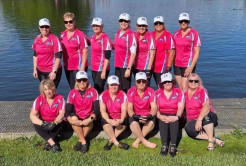
Busting with Life Dragon Boat Team are looking for new members

Setting New Year’s resolutions for: growing your fitness?, making new friends?, doing something new, different and FUN?

Come along to one of our trainings and see if dragon boating is for you! We will supply you with a life-jacket and paddle, all you need is clothing suitable to exercise in on the water and footwear you don’t mind getting wet.

Click here for more information. If you’re interested in having a go, email the team at infobwl96@gmail.com

Cuppa and a chat online with Breast Cancer Support Aotearoa

Breast Cancer Support Aotearoa (BCSA) begins the year with the continuation of its ‘Cuppa and a Chat’ online support groups. Held on Zoom, the inaugural groups were so successful last year that Chair Liz Pennington is keen to continue and encourages women to join these informal sessions.

BCSA are also looking for more women who would like to train to become volunteer 'Buddies' for others with breast cancer.

Click here to read more about this and BCSA’s other work.

follow us on Facebook | forward to a friend

Copyright © BCAC 2011, All rights reserved.
Our mailing address is: bcac@breastcancer.org.nz

Unsubscribe