
Latest News
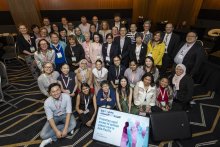
BCAC’s Libby Burgess joined the European Society for Medical Oncology (ESMO) Congress in Singapore, held over three days in December. The Congress brought together researchers, oncologists and patient advocates from across the Asia-Pacific (APAC) region and Europe to learn of breakthrough therapies and to advance local cancer care and research.
Libby filed this report on the Patient Advocate Summit at the Congress:
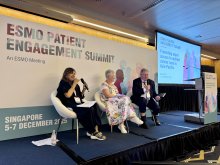
New Zealanders have limited access to breast cancer clinical trials. BCAC’s Libby Burgess was interested to hear how those in other Asia Pacific (APAC) countries fare. Here’s her report on this session at the European Society for Medical Oncology (ESMO) Congress in Singapore.
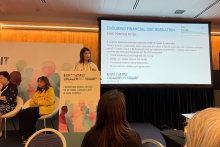
The ‘right to be forgotten’ refers to the stigma that can accompany a cancer diagnosis resulting in unfair treatment by financial institutions, insurance companies and employers.
BCAC’s Libby Burgess learnt more about this at the European Society for Medical Onocology (ESMO)’s recent Asia Pacific Congress.
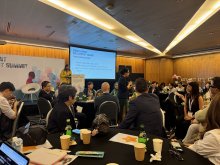
BCAC was pleased to see the topics of sex and fertility being discussed at the European Society for Medical Oncology (ESMO) Congress in Singapore as these are important issues for cancer patients that have not always had the attention that they deserve.
This session follows on from similar presentations at the 2025 Breast Cancer Trials scientific meeting. You can read our report from that meeting on Sexual health after breast cancer here.
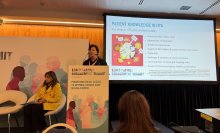
Patient input into the assessment of new medicines by Pharmac is an important topic in New Zealand, and BCAC’s Libby Burgess was pleased to hear from others with similar concerns in other Asia Pacific countries at the European Society for Medical Oncology (ESMO) Congress in Singapore.
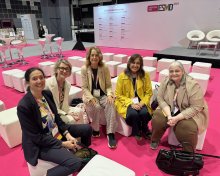
BCAC’s Libby Burgess caught up with the latest HER2 positive breast cancer research results at the ESMO Asia Pacific Congress in Singapore this December.
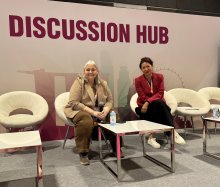
BCAC’s Libby Burgess was pleased to meet up with advanced breast cancer expert Fatima Cardoso at the ESMO Asia Pacific Congress in Singapore this December.
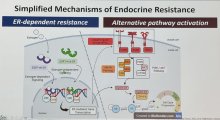
BCAC’s Libby Burgess caught up with the latest HR positive HER2 negative advanced breast cancer research results at the European Society for Medical Oncology (ESMO) Asia Pacific Congress in Singapore this December.

No need to panic. The Good Registry makes gift buying easy. They issue gift certificates which can be redeemed by donating to one of their charity partners – like BCAC! Click here to see how to complete your Christmas shopping from your desk. By donating to BCAC this Christmas, your friends and family can help us to keep supporting, informing and representing kiwi women with breast cancer.

In November BCAC responded to a Pharmac consultation to shorten its Options for Investment (OFI) list. This list currently has 127 medicines that Pharmac’s expert clinical committees have recommended for funding because they will benefit people, but are still awaiting a funding decision. There were five medicines for different breast cancer subtypes on the list at the time of the consultation: Phesgo and Perjeta for early HER2 positive breast cancer, Enhertu for advanced HER2-low, Keytruda for early triple negative breast cancer and Abraxane for advanced. Trodelvy for advanced triple negative breast cancer was added later in November.


