

Latest News
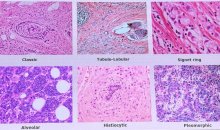
“After 100 years, we need to do something” is how Dr Sunil Lakhani summed up a session on lobular breast cancer at Breast Cancer Trials’ recent scientific meeting (Brisbane, July 2026).
As a pathologist, Dr Lakhani explained the challenges in classifying variants of invasive lobular breast cancer (ILC) and lobular carcinoma in situ (LCIS). ILC accounts for 10 to 15% of breast cancer cases, but is there has been much less research on it than on the more common ductal type. (You can read more about ILC here.)
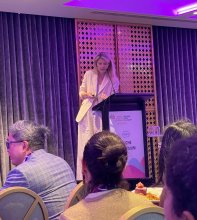
Medical oncologists from New Zealand and Australia met recently in Brisbane to discuss research progress with oral SERDs (selective oestrogen receptor degraders) for treating hormone receptor positive breast cancer. These medicines work by reducing oestrogen levels and keeping cancer cells in check.
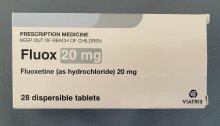
Breast cancer patients prescribed SSRIs (selective serotonin reuptake inhibitors, such as citalopram, escitalopram, fluoxetine, paroxetine or sertraline) to help with anxiety and depression after diagnosis need not fear that this will increase the risk of their cancer spreading (metastasis).
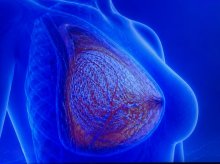
Even after six decades of silicone, “every implant fails eventually” according to Australian plastic and reconstructive surgeon Dr Michael Wagels who spoke at Breast Cancer Trials’ recent Annual Scientific Meeting in Brisbane.
Dr Wagels went on to describe an exciting innovation in the construction of breast implants. He and other researchers have developed a 3-D bioresorbable polymer breast shape made of polycaprolactone, the material used to make dissolving stitches. The implant is like a scaffold, made up of many fibres with spaces between them.
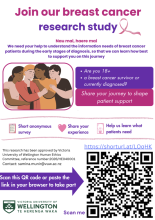

This election year, BCAC has joined forces with the Breast Cancer Foundation and 15 other patient advocacy organisations to publicise New Zealand’s shockingly poor access to publicly funded medicines. The Forbidden Pharmacy campaign aims to raise public and political awareness of the distressing situation many New Zealanders find themselves in - having to privately fund medicines to improve and extend their lives.
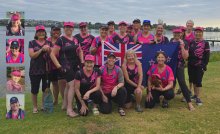
Auckland’s two breast cancer dragon boat teams are joining forces to take on the world at the International Breast Cancer Paddlers’ Commission (IBCPC) Dragon Boat Festival in France August 2026. While fierce competitors on the water during the NZ dragon boating season, both the Pink Dragons and Busting With Life are great mates off the water. With over 4,500 paddlers (over 150 teams) and 550 supporters from 25 countries, this year’s IBCPC is set to have the biggest attendance for first time hosts France. The regatta will take place on the shores of Lac du Bourget (France’s largest natural glacial lake) in the picturesque town of Aux-lex-Bains.

BCAC Chair Libby Burgess has welcomed Minister Seymour’s latest Letter of Expectations for Pharmac, in which he encourages the medicines funder to continue on its path of reform.
As a member of Pharmac’s Consumer and Patient Working Group over the last 12 months, Libby witnessed at first hand Pharmac’s efforts to reset its culture and processes.
“They invited some of their harshest critics into the room”, Libby said of the group of patient advocates. “Finally we had the chance to express the pain and frustration that patients have experienced with ‘old’ Pharmac’s processes and decisions.”

University of Auckland School of Nursing PhD student Xuanyue Zhang is looking for women to participate in a study looking at wellbeing, coping and support among Chinese immigrant women after breast cancer treatment in New Zealand. Xuanyue’s goal is to learn more about the experiences and needs of these women, so that future recovery and support services can be better tailored to their needs.
Participants will take part in a one-on-one, 30-60 minute interview with the researcher, online via Zoom or in person. The interview can be in Mandarin, Cantonese, or English. Participants will receive a NZD $30 grocery voucher. You can read more about the study here.

The first results from the OPTIMA trial were presented at the 2026 American Society of Clinical Oncology (ASCO) Annual Meeting in May.
This trial tested the idea that the results of a specialised laboratory test (Prosigna (PAM50) Assay) of breast tissue could be used to identify people with early ER-positive HER2-negative breast cancer who could safely avoid chemotherapy because there is a low risk of the cancer coming back.
Participants were women and men aged over 40 years, with ER+ HER2- early breast cancer with 0-9 positive axillary nodes and tumour size greater than 30mm if node-negative. These people would normally be offered both chemotherapy and endocrine therapy.


