
Latest News

No need to panic. The Good Registry makes gift buying easy. They issue gift certificates which can be redeemed by donating to one of their charity partners – like BCAC! Click here to see how to complete your Christmas shopping from your desk. By donating to BCAC this Christmas, your friends and family can help us to keep supporting, informing and representing kiwi women with breast cancer.

In November BCAC responded to a Pharmac consultation to shorten its Options for Investment (OFI) list. This list currently has 127 medicines that Pharmac’s expert clinical committees have recommended for funding because they will benefit people, but are still awaiting a funding decision. There were five medicines for different breast cancer subtypes on the list at the time of the consultation: Phesgo and Perjeta for early HER2 positive breast cancer, Enhertu for advanced HER2-low, Keytruda for early triple negative breast cancer and Abraxane for advanced. Trodelvy for advanced triple negative breast cancer was added later in November.

Here’s a great idea to show your company really cares this Christmas. The Good Registry’s gift certificates let your clients choose a charity – like BCAC! – for a donation from your company. It’s a great way to thank your clients and colleagues without burdening them with unnecessary ‘Xmas merch’. Click here to find out how it works.

Here’s an easy way to get Christmas gifts organised well in advance and to help BCAC at the same time. By clicking here you can buy gift certificates for those friends and family who already have everything they need, but would get a great feeling knowing they are helping women with breast cancer. The Good Registry is a great volunteer organisation set up by some Wellington women who are passionate about doing good. They issue gift certificates which can be redeemed by donating to one of their charity partners – like BCAC! By donating to BCAC this Christmas, your friends and family can help us to keep supporting, informing and representing kiwi women with breast cancer.

Why not help BCAC as you spread Christmas cheer this year? BCAC’s partnership with The Good Registry makes gift-giving easy. By clicking here you can buy gift certificates for those friends and family who already have everything they need, but would get a great feeling knowing they are helping women with breast cancer. The Good Registry is a wonderful volunteer organisation set up by some Wellington women who are passionate about doing good. They issue gift certificates which can be redeemed by donating to one of their charity partners – like BCAC! By donating to BCAC this Christmas, your friends and family can help us to keep supporting, informing and representing kiwi women with breast cancer.
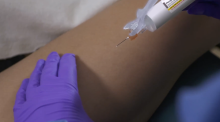
BCAC is delighted to hear that Pharmac proposes to fund Phesgo®, a rapidly injectable formulation of two anti HER2 medicines, pertuzumab and trastuzumab, from 1 December 2025. Currently these medicines are administered sequentially by intravenous infusion, but Phesgo contains an enzyme that allows it to be given as a single injection under the skin. This means a much shorter treatment time at hospital outpatient clinics for patients.

Dr Emma O’Loughlin, Senior Lecturer in Surgery at the University of Otago, has shared a new set of post-operative exercise videos designed for women recovering from breast cancer surgery in Aotearoa New Zealand. They support recovery after mastectomy, lumpectomy, and lymph node surgery.
These short, supportive videos were co-designed with Māori, Pacific, and non-Māori/non-Pacific women, based on interviews and focus groups about their recovery experiences and preferences for online content. They offer safe, practical, and culturally relevant guidance to support shoulder mobility, reduce the risk of lymphoedema, and promote confidence during recovery. They would suit patients from week 1 post-op (also safe for those with drains).

Currently, New Zealand insurers can use genetic test results when underwriting insurance policies, potentially leading to higher premiums or policy denials. Against Genomic Discrimination in Aotearoa (AGenDA) is pushing for a ban on the use of genetic information in insurance decisions, mirroring protections seen in other countries.
BCAC Secretary Fay Sowerby, who is also is a spokesperson for AgenDA, filed this report on the group’s latest activity.
On Tuesday 12 August 2024, AGenDA’s Fay Sowerby and Andrew Shelling organised and facilitated an education session on genetic discrimination in insurance for members of parliament, hosted by Todd Stephenson MP.

BCAC has written a submission on the Healthy Futures Pae Ora Amendment Bill, seeking to reset Pharmac’s statutory objectives. We asked for removal of the restrictive “within the amount of funding provided”, written in 1993 when Pharmac was established with the purpose of constraining spending on medicines. Like every other Crown Entity, Pharmac is already required to be financially responsible. The long-standing focus on minimal investment has prevented Pharmac from actively striving to provide modern treatments to people when they need them. We’re hoping a change in focus will lead to better access to medicines, delivering longer, healthier lives to Kiwis.
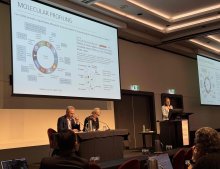
The current state of play in developing liquid biopsies for breast cancer was described at Breast Cancer Trials’ Annual Scientific Meeting in Hobart by Professor Sarah-Jane Dawson from the Peter MacCallum Cancer Centre in Melbourne.
A liquid biopsy is a blood test that looks for materials, such as circulating tumour cells (CTCs) or cell-free circulating tumour DNA (ctDNA) released by breast cancer tumours into the bloodstream.
In breast cancer, ctDNA could provide information to help with early detection, molecular profiling, detecting minimal residual disease, detecting relapses and monitoring responses to therapy.


