

Latest News

Sadly, BCAC member group, the Rotorua Breast Cancer Trust (RBCT), recently lost their chairperson to breast cancer. Fellow trustees on the RBCT write of her warmth and vitality and how Donna showed them how to meet life's challenges head on. Read their tribute below.
When I first met Donna we had an instant connection. We were both facing a huge hurdle - breast cancer. I had just completed my treatment journey and Donna was about to embark on hers.
Her wonderful sense of warmth and vitality was inspirational so we asked her to be a poster girl for the 2009 Pink Walk campaign. She accepted and from then on Donna became one of our Rotorua Breast Cancer Trust sisters.
Triple negative breast cancer (TNBC) is sub-type of breast cancer that lacks the receptors for hormones or HER2 protein that are found in hormone receptor positive breast cancer and HER2 positive breast cancer, respectively. About ten percent of New Zealand women diagnosed with breast cancer will be triple negative. TNBC is more common in younger women (under the age of 44) [1] and tends to be more aggressive than other sub-types. Between 15 and 25% of those diagnosed with TNBC carry BRCA gene mutations [2].
TNBC is usually treated with surgery, radiation therapy and chemotherapy. Because it lacks hormone or HER2 receptors, it will not respond to hormonal (endocrine) therapy or anti-HER2 therapy.
As a Māori or Pasifika woman undergoing treatment for breast cancer, you may like to know about support groups in which you can share and talk with other women of your culture. Many Māori and Pasifika women are diagnosed later with breast cancer and/or have more aggressive forms of the disease.
Some Māori and Pasifika women find it an unfamiliar or uncomfortable experience dealing with various health and medical professionals and asking questions. If you find it difficult to talk to your doctor or to understand what they're saying, here are some ways you can help yourself:
For BCAC, the care of our Māori and Pasifika women with breast cancer is of great concern because we are seeing some disturbing statistics.
Recent Ministry of Health reports show that Māori women are 21 per cent more likely to be diagnosed with breast cancer, 30 per cent less likely to be diagnosed early (1) and 72 per cent more likely to die from breast cancer than non-Māori (2). Other data suggests Māori women tend to get breast cancer at a younger age(3). Pasifika women also have higher rates of breast cancer than Pākehā/European women.
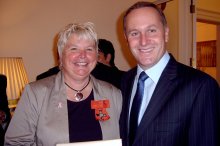
BCAC committee member, Dr Chris Walsh, received a New Zealand Order of Merit for services to women’s health in the New Year’s Honours 2010.
On this page you'll find out more about a condition known as lymphoedema, which can be a side-effect of breast cancer surgery.
Below you'll find information on:

Maori women have had the highest rates and the largest increase in breast cancer over the last two decades according to new research from the University of Otago, Wellington.
The difference between Maori rates, and that of European/Other women, increased from 7% in the period 1981-86, to 24% in 2001-2004; with Maori women's breast cancer rate increasing from 123 to 210 per 100,000 women.
However the research, led by Dr Ruth Cunningham from the Department of Public Health, says the reasons for the unusually higher Maori rates are still unclear, as
internationally breast cancer rates are usually highest among those with higher incomes.

My name is Jude and I am a 53 year old wife, mother to 3 boys, and registered nurse who works in the field of oncology.

Herceptin and HER2-positive breast cancer
Herceptin is a targeted therapy for HER2-positive breast cancer.
HER2 stands for human epidermal growth factor 2, a protein located on the surfaces of cells involved in controlling cell proliferation. Breast cancer tumours that have higher-than-normal levels of HER2 are said to be ‘over-expressing’ this protein, and are referred to as HER2 positive. About 23% of breast cancers are HER2 positive.
Herceptin (generic name: trastuzumab) is a drug designed to lock onto and shut down the HER2 protein. Its molecular structure is based on an antibody that can precisely target the HER2 protein. Herceptin is a ‘biological drug’; it is manufactured using laboratory-cultured cells.


